
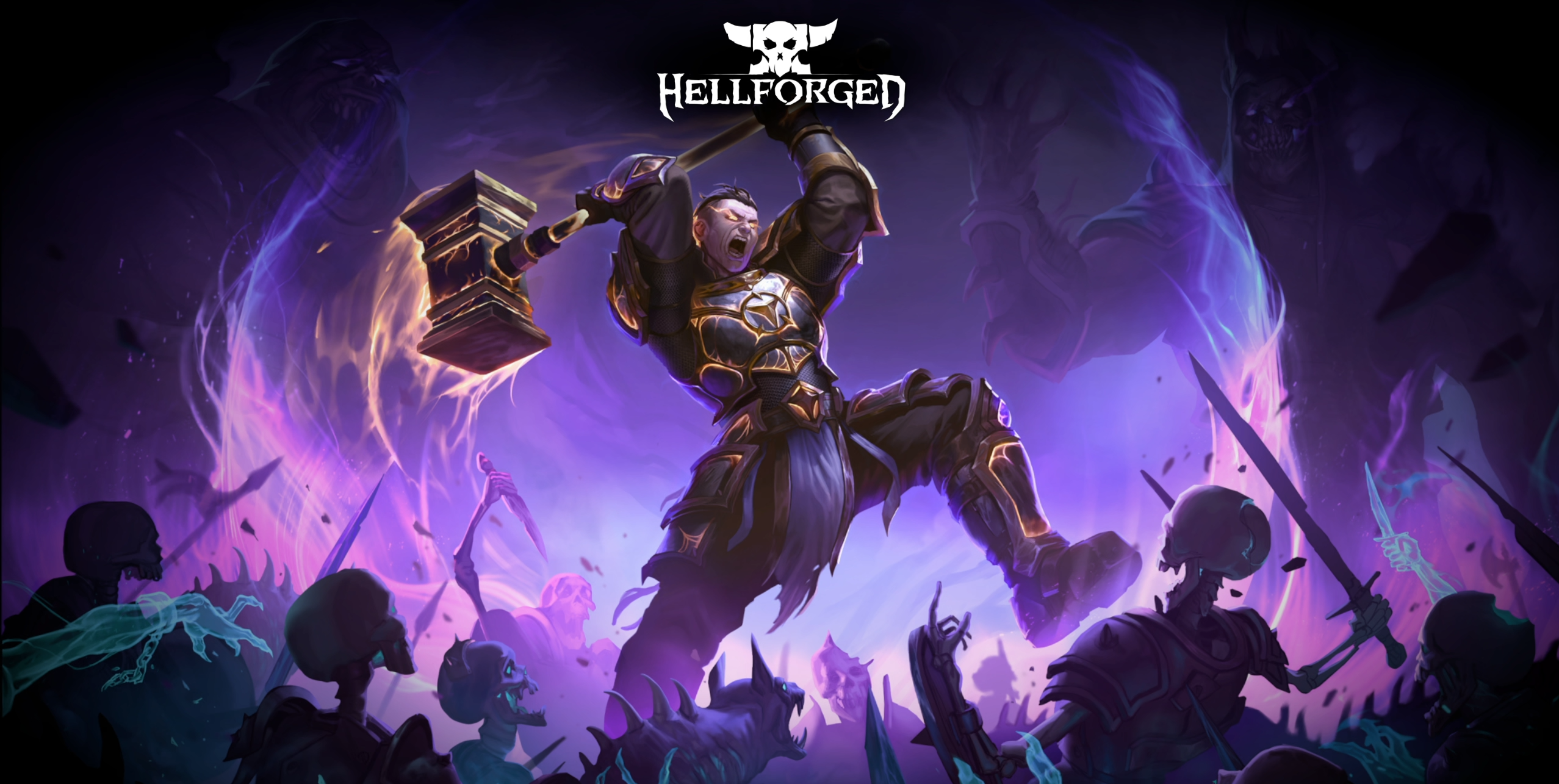
HellForged: Playtest Review –

First Steps
I was given the opportunity by Grindstone and Moonpyre to jump into a private playtest for Hellforged, and over the course of 10 days, I spent a lot of time playing the game on and off. I genuinely enjoyed the experience, and here’s a breakdown of what you can expect from Hellforged in its upcoming full release.
Right from the start, the game gives players the option to use either Mouse or WASD movement. Personally, I found WASD movement really pushed me into that familiar Vampire Survivors headspace. The game also lets you choose between manual aiming and auto aim, and naturally, I leaned heavily into auto aim to fully embrace the chaos.
After that, the game essentially throws you straight into your first run. (Full Run at End of Review)

The Core Gameplay Loop
Inside a run, leveling works similarly to Vampire Survivors. You kill mobs, gain XP, level up, and each level grants a choice between three random boons, upgrades, or character advancements.
As the run progresses, Shrines of Power begin spawning across the map. Interacting with one summons an Elite enemy that must be defeated. Once defeated, you’re rewarded with a choice between three abilities.
After unlocking abilities, future level-up rewards begin including upgrades for those abilities as part of the pool. While Shrines of Power spawn frequently throughout a run, I found that acquiring too many abilities too quickly can muddy the upgrade pool. Instead of building a few powerful abilities, you can end up spreading upgrades too thin across multiple weaker ones.
Enemies can also drop weapons and gear during runs. These items carry over into future runs and can be equipped beforehand to boost stats or support specific builds you want to focus on. Interestingly, the first three items you pick up during a run are automatically extracted with you, even if you die.
Runs continue until you unlock The Obelisk, which essentially acts as the run’s exfil point. Once activated, players can either immediately extract or choose to claim a series of timed rifts for additional score before leaving through the Obelisk.


The Encampment & Progression
After exfilling, players return to the Encampment, which acts as the game’s main progression hub.
The Encampment houses several important systems. First is the Progression Tree, where players unlock new gameplay features and progression systems. Through progression, you unlock things like Achievements, the Blacksmith, the Eternal Tree, the Arsenal, Expeditions, the Stash, and even new characters such as Mortenzia, who was locked during this playtest build.
Achievements consist of various challenges, some intentional and others completed naturally during gameplay. Objectives include things like “Kill 10,000 enemies” or “Go 30 seconds without being hit.” Completing achievements rewards players with Chaos Shards, the game’s primary currency used throughout nearly every progression system.

The Blacksmith
The Blacksmith allows players to upgrade gear collected during runs, improving stats and strengthening build potential. These upgrades are also purchased using Chaos Shards.

The Eternal
The Eternal Tree feels like a softer, more streamlined version of Path of Exile’s iconic skill tree. Players can branch into multiple directions, with different paths leading toward larger specialization bonuses. Minor nodes offer boosts like “+20% Critical Damage” or “+8% Lifesteal,” allowing for meaningful build customization.

The Arsenal
The Arsenal is where players unlock new abilities and purchase relics. These abilities and relics then begin appearing during runs through level-ups and Shrines of Power, creating another layer of build crafting and replayability.

Expeditions
Expeditions serve as the game mode selection system where all runs begin. During the playtest, two maps were available, Undercrypt and Forsaken Reach. Each map contains four tiers of difficulty.
From what I experienced, Tiers 2, 3, and 4 all featured their own bullet hell-style bosses at the end of runs. Defeating these bosses is required to progress both the story and the game’s overall progression systems.
The Stash functions exactly as expected, allowing players to store gear for future builds and playstyles, making experimentation far easier.
As mentioned earlier, I’d assume the full release will feature multiple unlockable characters with unique Overcharge abilities. The only teased character during this playtest was a female elf named Mortenzia.

Final Thoughts
If you’re a fan of Vampire Survivors, then you’re going to love Hellforged, no question about it. The game takes the familiar formula and injects it with deeper progression systems, stronger build variety, and an underlying sense of long-term character development.
Hellforged is easily the game I’ve spent the most time with when it comes to demos and playtests. I’ve already clocked close to 10 hours, and honestly, there were times I had to force myself to step away because I constantly wanted to jump into another run.
In its current state, I’d give Hellforged a strong 9/10. If the full release delivers more characters, bosses, and continued build depth, I could genuinely see it challenging Vampire Survivors for the crown of the genre.
Full Run Video Below