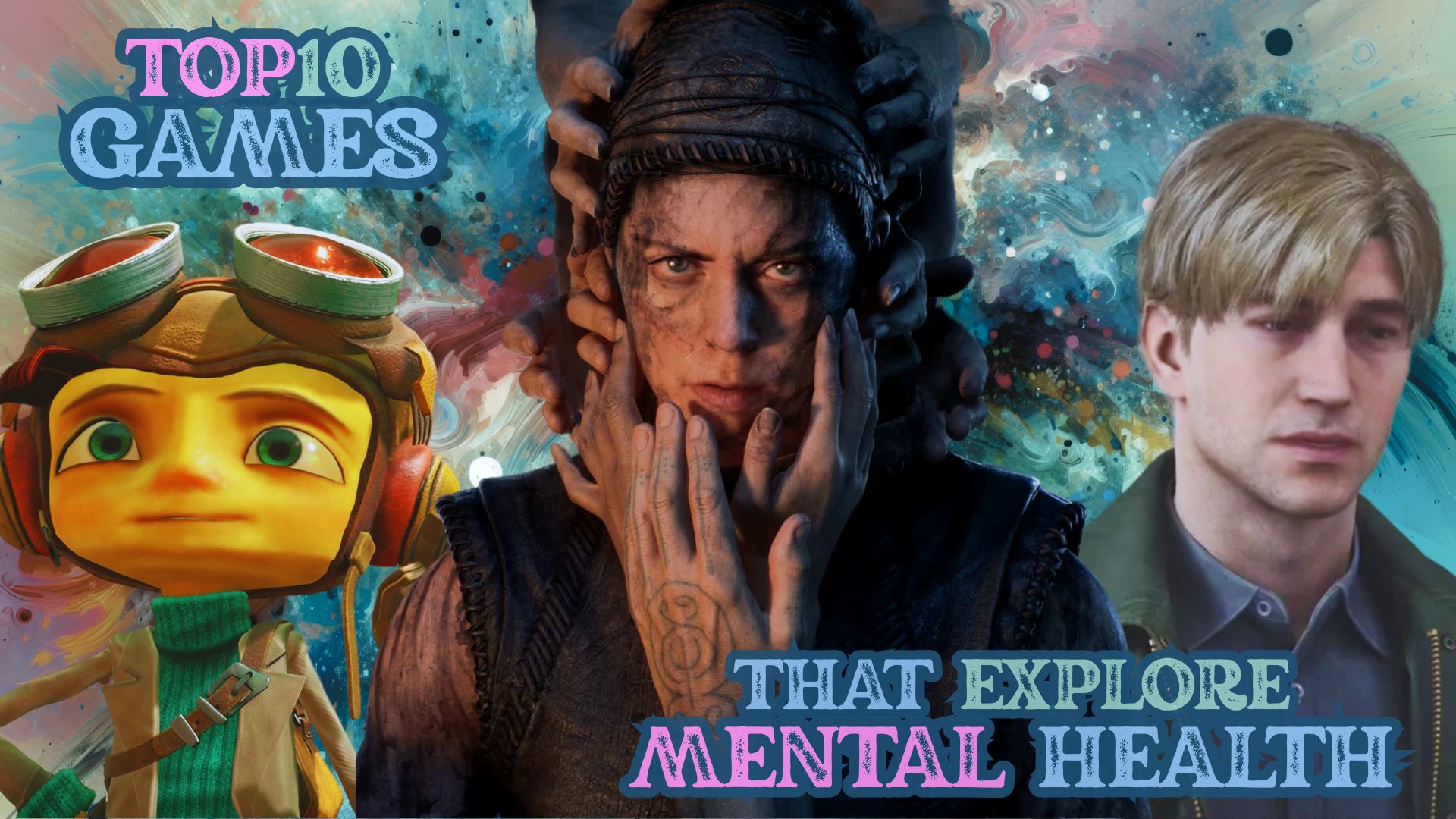
Mental health challenges affect countless lives, yet few video games confront these themes with the depth and empathy they deserve. To highlight some of the titles that do, I’ve curated a selection of games that explore mental illness with maturity and authenticity.
By harnessing the immersive power of interactive storytelling, these games offer experiences that may resonate personally, or at the very least encourage empathy by fostering self-reflection and sparking meaningful conversations about well-being.
10. Wanderstop

Wanderstop is the newest game from the creator of The Stanley Parable. The story follows Alta who is an undefeated warrior that has lost the ability to fight. She is experiencing a deep sense of burnout and existential dread in regard to the uncertainty of how she is going to be able to move forward in her life. It isn’t long before it becomes a charming and cozy life-sim where the player takes control of Alta to farm materials and make tea while slowly but surely recovering from a complete mental breakdown. This game reinforces the need for humans to engage in self-care activities, fulfilling hobbies, and find meaning outside of their professions. Most people have experienced some form of burnout in their lives and everything that comes with, and this game not only understands that, but also highlights the value in finding purpose beyond a singular aspect of one’s life. If you’re currently experiencing burnout, a relatively simple game about making tea and overcoming one’s personal struggles may be just the right recipe to get you back on track!
Platforms: PC, PlayStation 5, Xbox Series X|S
9. It Takes Two

It Takes Two is about a crumbling marriage that is on the verge of divorce, and the impact this has on the innocent mind of the couple’s child as she becomes fought over more than she is cared for. As a married man, I can attest to how a long-term relationship can go through its ups and downs, and how love can almost inevitably lead to conflict due to the depths of our emotional connection and desire to outlast our issues. I also know how simple it can be to hurt your spouse without intending to, and how resentment can grow and fester when the communication of feelings between partners isn’t of paramount importance. While my marriage has never led to the outright hatred these characters feel towards one another at times, it is not cliche to say marriage is difficult, even in a healthy relationship. It Takes Two attempts to tackle these themes and succeeds through bold narrative choices that I have never seen in a video game before. It also functions as a great co-op platformer that constantly switches up gameplay mechanics, so nothing starts to feel stale. It’s the perfect game for a romantic couple or even a couple of close friends and provides a valuable lesson about the effects of our actions on others, and how developing healthy habits can provide a better life for our loved ones.
Platforms: PlayStation 4 & 5, Xbox One & Series X|S, Nintendo Switch, PC
8. That Dragon, Cancer

That Dragon, Cancer is a deeply personal, autobiographical video game about grief, faith, love, and loss, specifically, the creators’ experience of losing their young son, Joel, to terminal brain cancer. Players guide Joel’s parents through a selection of short but powerful story vignettes that blend day-to-day family experiences with surreal and dream-like elements. The game kicks off with Joel getting his diagnosis, following up with the eventual hospital routines, and as the game progresses it allows for the player to enjoy some of the more wonderous and lighthearted aspects of Joel’s last years through simple pleasures like playing with bubbles and feeding ducks. The fact that this game is based on a true story makes the narrative hit much harder, especially as someone that almost lost a loved one to cancer, this game nails the deep fear that family members experience when a loved one is suffering from this disease as well as the ongoing grief that comes with it. This is not a “fun” game, but it is an important one. Play at your own risk as it is triggering to say the least, though powerful in its content.
Platforms: PC, macOS, iOS, Android
7. Spiritfarer

Spiritfarer is a beautiful and cozy game where the player takes control of a former palliative care nurse named Stella, the newly awoken captain of the mythological ferryman Charon’s ship to the afterlife. Stella is tasked with helping people that have died by guiding their souls to the afterlife through the Everdoor. Alongside Stella’s cat Daffodil, the player captains the boat; sailing across a gorgeous seascape, going fishing, making additions to the ship, and of course, meeting many lost souls. The player learns about these souls, their previous lives, their past accomplishments, their certain failures, their personal regrets, and their loved ones that they’ve left behind in the land of the living. As Stella, the player works to help them reconcile their regrets, find peace, and celebrate the joys of a life lived, regardless of the negatives. Spiritfarer may be fantastical in its hand-drawn character design and art direction but remains very human in its emotionally gripping narrative. If you choose to play this game, which I think you should, bring tissues; you’re going to need them.
Platforms: PC, PlayStation 4 & 5, Nintendo Switch 1 & 2, Xbox One & Series X|S, iOS, Android
6. Night in the Woods
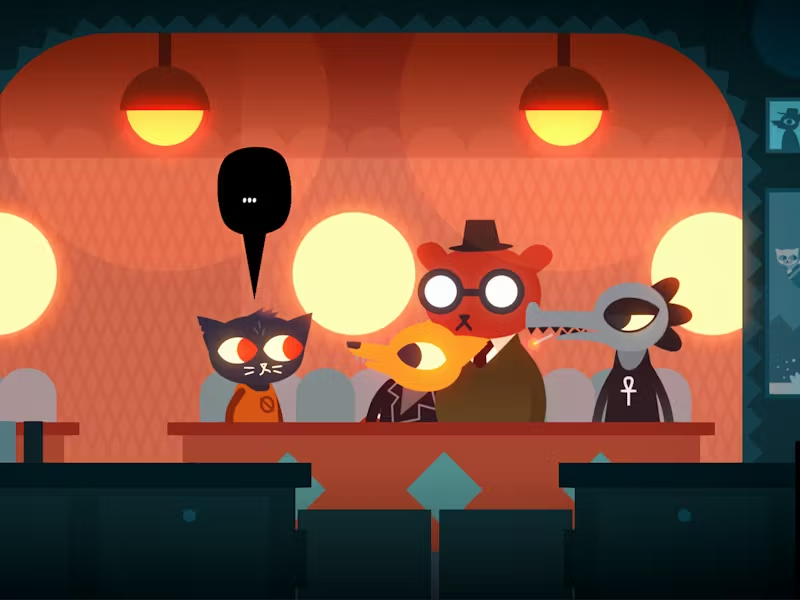
Night in the Woods is a narrative based side-scrolling game where all the characters are animals, yet everything about them is incredibly human. Mae is a youth that returns to her hometown after personally struggling and inevitably dropping out of college. She comes home to a pair of disappointed parents while trying to figure out what the next step in her life will be. Mae rekindles old friendships she had in high school, many of which have not left the town like she did, leading to a deeper emotional analysis highlighted by her memories, and evolution in regard to her past self. Many of the characters she encounters are living mundane lives or feeling directionless, similar to how Mae is feeling. The game follows how Mae reconnects with people she used to know, her social anxieties, as well as her deep fear of the unknown. She does not know what is next in her life and that frightens her deeply, as many people in her situation have certainly experienced. Everyone has been a youth in their lives, and most have at one point been unsure what to do next, felt stuck, felt like a failure or a disappointment, and that’s what makes this game so universally relatable for the majority of players that pick it up.
Platforms: PC, Nintendo Switch, PlayStation 4 & 5, Xbox One & Series X|S
5. Celeste

Celeste is a challenging yet rewarding platformer about climbing a mountain. While climbing the physical mountain is a tangible goal, it also serves as a metaphor for overcoming personal anxieties and hardships and ultimately triumphing. When Celeste first starts her journey, she is at a particularly low point in her life where all of her problems seem overwhelming and nearly impossible to solve. She commits her focus to reaching the top of a mountain to prove to herself that she is capable of achieving great things, with the desperate but optimistic hope that this will allow her to quell the doubts and uncertainty that plague her mind. The more the player progresses, the more characters they will meet and the more they’ll learn about Celeste and her troubles. Some characters Celeste meets tell her to turn back and that summiting the mountain is too dangerous a goal, while others are more supportive. Celeste continues to make the decision to continue to face adversity despite having doubts. Celeste is a game that almost everyone can relate to and that is exactly why it remains a modern classic.
Platforms: PlayStation 4 & 5, Xbox One & Series X|S, Nintendo Switch, PC
4. Hellblade: Senua’s Sacrifice

Hellblade: Senua’s Sacrifice is a deeply psychological third-person, narrative driven action game that follows Senua, a broken Celtic warrior who suffers from severe schizophrenia in a time and geographical setting where that was seen as madness or a curse. Throughout the game Senua is taunted, applauded, misled, and attacked by the many voices in her head, each of varying volume and tone. Some of the voices are helpful, soft-spoken, and kind, while others are cruel, twisted, and seek to punish Senua for her failures to achieve her goals. This collection of varying intentions and tones seem relatively representative of the reality of the unfortunate disorder, and the developers spent a great deal of time working closely with mental health professionals to make sure they got it right. Hellblade is ultimately about overcoming personal difficulties and self-doubt and succeeding in spite of whatever may hold us back, which truly makes for an inspiring and compelling narrative that is made even more enjoyable by the gorgeous visuals and hard-hitting action sequences. The ability to listen to the developers’ commentary adds a wonderful layer of insight into the project, so make sure and wear headphones to make the experience that much more immersive and disturbing.
Platforms: PlayStation 4 & 5, Xbox One & Series X|S, Nintendo Switch, PC
3. Psychonauts 2

Psychonauts 2 saw the team at Double Fine hire psychologists to help the writers approach difficult subjects in a mature, informed way and it shows. The player enters the minds of, and essentially platforms their way through the traumas and insecurities of select individuals. Double Fine’s continued ability to expertly walk that ever-so difficult tightrope when approaching serious subject matter, while remaining light and fun, is a truly amazing feat. The gameplay mechanics themselves serve to represent difficult emotions such as floating platforms standing in as a physical proxy for the emotional unsteadiness that comes with anxiety, shifting gravity to highlight the disorientation of self-doubt and low self-esteem, and hidden memories that allow players to piece together fragmented psyches. Psychonauts 2 is a darn fine platformer at its core, remaining tight and responsive, while challenging both the player’s abilities as well as their perception of each character’s internal struggle, and these deeply ingrained psychological themes serve as brilliant and engaging icing on the cake.
Platforms: Xbox One & Series X|S, PlayStation 4 & 5, PC, macOS
2. Mouthwashing
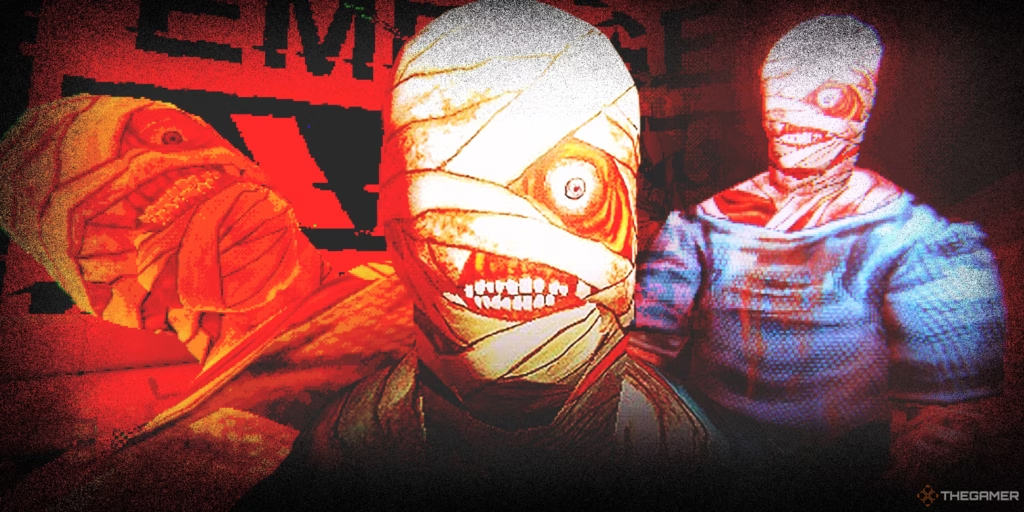
Mouthwashing is a first-person, narrative driven psychological horror game set on an interplanetary freighter ship carrying, well… I’ll let you find out for yourself. The uncomfortable narrative unfolds rapidly as the player begins swapping between timelines and two unique protagonists with differing perspectives and mental states. The ship crashes and the surviving crewmembers become stranded in space with no way to contact the company they work for to save them. The captain is injured severely and what transpires next goes to darker and more graphic and mature places than you may initially expect. The game bravely approaches the grim and taboo themes of psychosis, suicide, regret, remorse, grief and the human consequences associated with such subjects. With a terrifying throughline of grotesquerie and uncanny human interactions, it’s one of only a few modern titles to truly capture the often bizarre and unfortunate nature of a crumbling psyche in moments of utter crisis and tremendous uncertainty.
Platforms: PC
1. Silent Hill 2

Silent Hill 2 is a deeply psychological game about suffering from trauma, guilt, shame and ultimately love. James receives a letter from his wife who he has believed to be dead for several years. She invites him to meet her again in their “special place” in a foggy town called Silent Hill. So begins his daunting quest to reunite with his dead wife. The town of Silent Hill theoretically is a manifestation of James’ trauma, guilt, lust, and shame, represented through the enemy types he encounters, the Hellish parallels between he and his main antagonist, and the disorienting fog of the town itself. During his exploration of the dead-end roads and mostly abandoned buildings, James meets a cast of strange and struggling individuals that seem to be going on their own traumatic journeys of self-realization. Are these characters real, or are they a part of James’ fractured mind? Like everything in Silent Hill, this concept is mostly left up to the player’s interpretation of what is and what is not real, and with multiple endings, there isn’t exactly a true canon for this title. That’s part of what makes this game’s narrative so unique and impactful to this day, that and it’s still a terrifying treat to play in 2025. The somewhat recent remake served to modernize the gameplay for a new audience of players, allowing Silent Hill 2’s narrative to be experienced by a younger generation of gamers, serving still to this day as one of the best psychological horror titles in gaming history.
Platforms: Remake is on PlayStation 5 and PC; HD Remaster is on Xbox One & Series X|S