
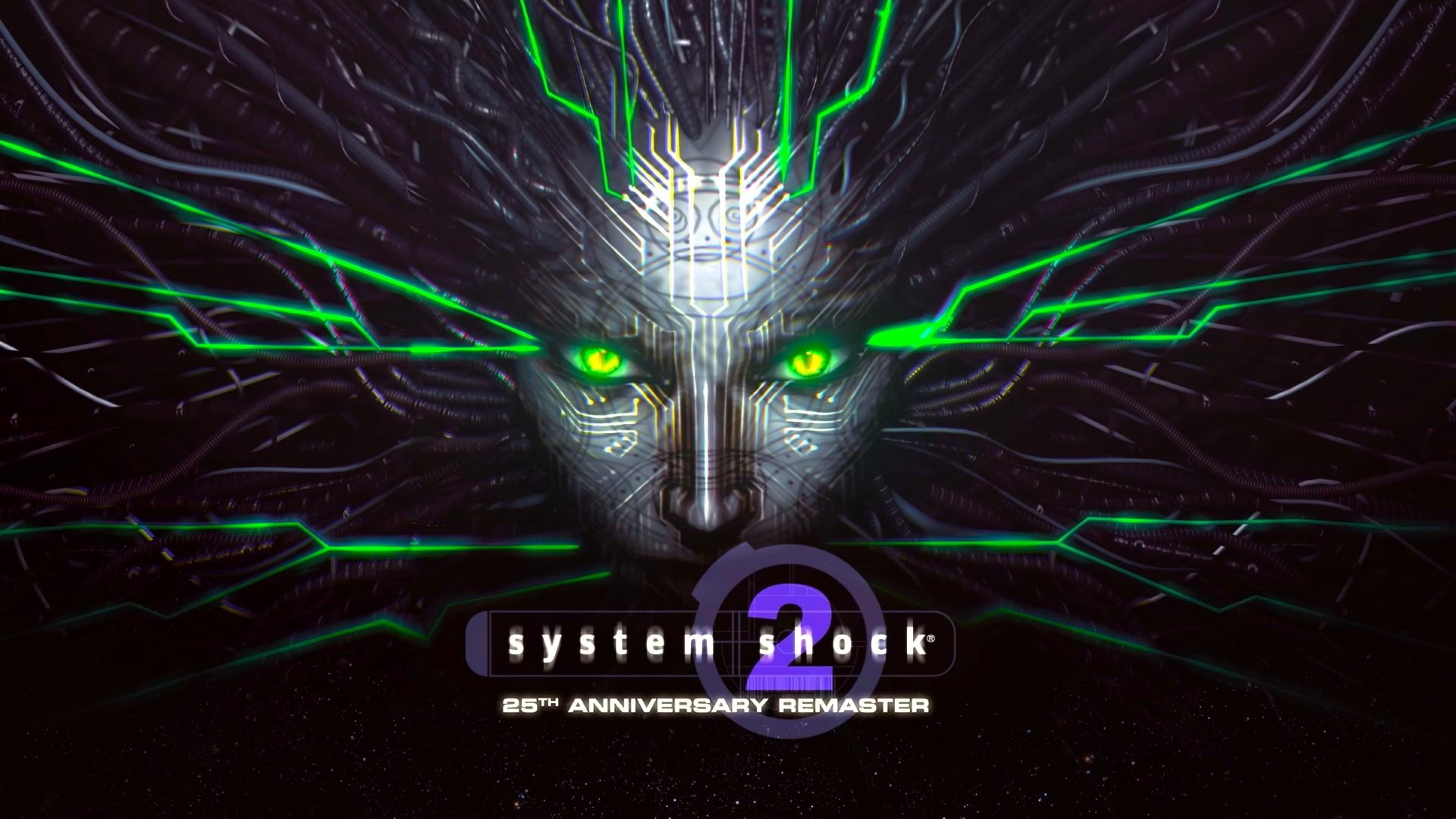
In 1999, Ken Levine, founder of Ghost Story Games and best known for his work on the BioShock series, co-developed the sci-fi action RPG survival horror masterpiece System Shock 2, alongside Irrational Games and Looking Glass Studios. Originally envisioned as a standalone project, the game’s narrative was retrofitted into a sequel after Electronic Arts joined as publisher. I’d never played System Shock 2 until the release of Nightdive Studios‘ System Shock 2: 25th Anniversary Remaster on console, but as a longtime fan of BioShock, I couldn’t wait to dive into this inevitably uncanny world of fear and distortion.
Players begin by making their way through futuristic training modules, learning many of the game’s mechanics that feel instantly familiar to BioShock veterans. The player is introduced to advanced tech usage, weapon proficiency and maintenance, inventory management, and system hacking, among other useful skills. Once trained, the player chooses their preferred military branch and specializations, shaping their character’s backstory and stats in a way somewhat reminiscent of Fallout 3 and New Vegas. I personally enlisted in the Navy, and in the blink of an eye, I had gone through years of military postings that provided my character with an improved mastery over firearms, system hacking, weapon upkeep, and other skills that proved vital in the encounters to come.

Similar to its predecessor, the game pits players against a rogue AI in brutal close quarters combat with mutated horrors, unstable security systems, and malfunctioning machines, among other formidable foes. After waking up from cryosleep with a touch of amnesia aboard the derelict Von Braun starship, my character’s survival hinged on rapid adaptability and supply procurement, as well as strategic stat allocation, whether that was through upgrading combat prowess, further enhancing repair abilities and fine tuning my electronic hacking skills, or dumping points into defensive measures. Regardless of my choices, I knew that the pulse-pounding journey ahead was only going to get more interesting.
Much like in BioShock, System Shock 2 doesn’t throw players in entirely alone. From the moment the player steps out of the cryochamber, a desperate but seemingly helpful voice crackles through their radio, guiding them through gore-soaked hallways and haunting visions, for reasons as mysterious as the horrors that surround them. Grim scenes of death, fleshy apparitions, ghost sightings, terrible screeches, distant groans, and eerie whispers all quickly make clear that survival aboard the Von Braun won’t be as easy as previously assumed.

As the gameplay loop began to really click for me, I learned what gear and resources were truly worth picking up and what was just darkly humorous clutter. With sparse vending machines and revival stations compared to the slightly more generous provisions from BioShock, each encounter felt tense and left me with a lingering sense of unease. I found myself compulsively saving my progress before entering a new area, with the certainty that I would shortly meet my demise at the hands… or claws, of some twisted nightmare or robotic menace.
Now, let’s talk nuance. Back in 1999, very few first-person shooters dared to fuse narrative depth with gameplay complexity. Games like DOOM delivered plenty of weapons and bloody metal mayhem, but System Shock 2 gave gamers a true mystery thriller, full of innovative mechanics and player agency. Ken Levine’s influence ushered in a new standard for compelling story crafting as he pioneered an altogether fresh and original narrative experience with a focus on drawing out emotional connections and reactions through an engrossing plot that immersed players into more than just their struggle for survival, but also their search for the truth.

These aspects of the game’s design were highlighted through excellence in environmental storytelling, shifting allegiances and fluid objectives, evolving threats, and the ever-present concern of whether or not the player can trust the voices telling them what to do. Tell me if that sounds familiar, would you kindly? With a rogue AI element at play, perhaps trusting the voice on the radio isn’t the most advisable course of action, much less the voice in your head, but I digress.
The visuals in Nightdive’s remaster have been given a crisp graphical update with advanced shaders for smoother console gameplay, coupled with some incredibly seamless and beneficial quality-of-life upgrades such as optimized controller support, cross-platform multiplayer, and refined animations that give the game a more modern feel. Yes, it’s nearly a thirty-year-old game, and yes, that still shows, but within minutes of jumping into the experience whether through the single-player or multiplayer, I found myself just as immersed as I felt the first time I played BioShock.

I was jumping at shadows and startling noises, backtracking for clues and supplies, shooting robots, whacking monsters, and hacking systems to my heart’s content. With a fair number of accessibility options with regard to the difficulty settings, visual and audio enhancements, map and journal tabs, item slotting and weapon equipping, I found it relatively simple to tailor the experience to my personal preferences and enjoy it far more than I had originally believed possible. Of course, it was foolish to not realize from the outset that I would love it, as it’s a Ken Levine game remastered by Nightdive Studios. Neither have steered me wrong or disappointed me yet!
With all of that said, I do believe that a proper remake treatment is in order for the classic sequel, akin to the 2023 remake of the first System Shock, which was also lovingly crafted by Nightdive. In the same vein as classic titles like Resident Evil, sometimes only a full-scale remake with modern visuals, gameplay enhancements, and thoughtful rebalancing can truly resonate with today’s players and reignite the magic for a new generation.
That’s coming from someone who still plays games on the original PlayStation from time to time, but I understand that with rapidly evolving technology at the fingertips of gamers of a younger generation, sometimes a total modernization is all that will attract them to a game. I’m sure that many fans of the original System Shock games, and/or retro games in general might disagree (it feels awful calling something from the ’90s ‘retro’), but the truth is that different generations of gamers value different elements in their gaming experiences.

In a single-player video game, I have personally always valued story and gameplay above all else. Is it clever or interesting? Does it elicit an emotional response? Is the narrative intriguing and unique? Is it fun to pick up and play? Those are really the only things that matter to me, and my answers to those questions regarding the System Shock 2: 25th Anniversary Remaster are yes, yes, yes and yes! It was a blast from start to finish. The musical score perfectly matched the tone of each scene and highlighted the rising and falling of action throughout each frightfully frenetic scenario.
The roleplaying elements were innovative for the time they were originally conceived, yet comfortably familiar to RPG players of the modern era. The enemy designs clearly inspired later game’s foes like Halo‘s flood and others of the sort, so I was a big fan. The inventory management felt quite a bit like Resident Evil 4, and the weapon maintenance felt like a far more complex version of the repair necessity in games like S.T.A.L.K.E.R. Call of Pripyat and Dying Light, with System Shock 2 involving a puzzle/repair mini game to successfully complete the function.

It was a truly inspiring game as it clearly inspired SO many other games, and Nightdive’s remaster was a remarkable achievement that showcased the game in all of its glory in the most faithful and considerate way possible. Still, I think a remake should be in the pipeline because I think it would draw in a lot more players who would get to experience Ken Levine’s legendary sci-fi survival horror action RPG narrative.
Then again, perhaps part of System Shock 2‘s charm comes from its graceful aging, much like Half Life, Timesplitters, and many other FPS titles of that similar look and feel. The quirks, the dated gameplay, the sometimes-restrictive actions and exploration, etc., all make it what it is and remains to be, only now with some fancy makeup and a quality face lift from the talented team at Nightdive Studios.

Regardless of where I land on this (which is an easy 8/10 for anyone asking), I think this title’s story and innovative gameplay should be experienced at least once by any fans of single-player first-person shooter, survival horror, science fiction, roleplaying, or narrative-driven games. If you’re a fan of all of those genres like I am, then you’re in luck, and if you’re a fan of Nightdive Studios and/or Ken Levine games, then just go ahead and pick this game up now! It’s available on Xbox Series X|S, PlayStation 5, Nintendo Switch, and PC through Steam, GOG, and the Epic Games Store, so if it sounds interesting, take your pick of platform and suit up for an action-packed narrative experience that you won’t soon forget!