
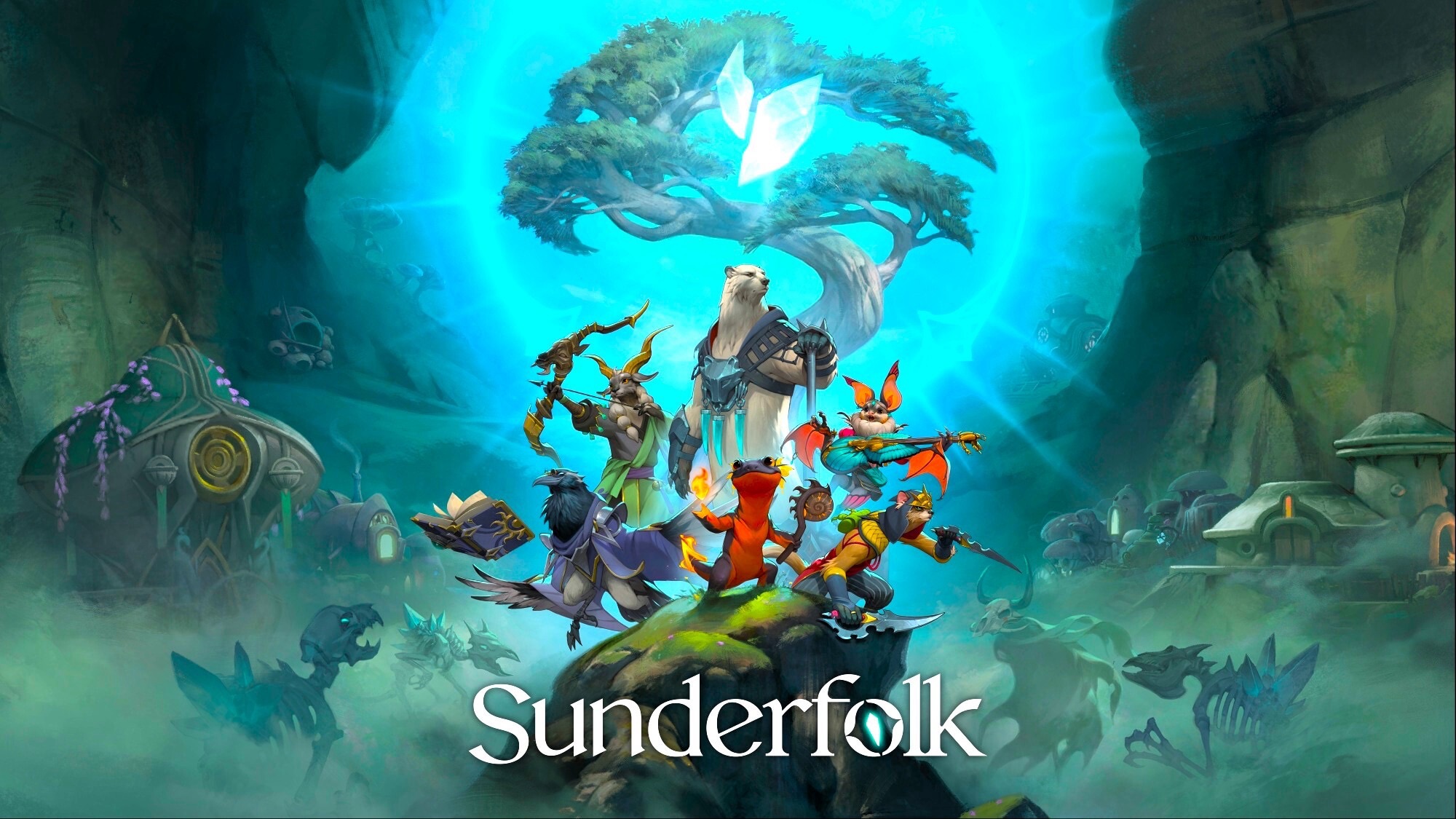
Sunderfolk is a high fantasy, cooperative turn-based tabletop RPG inspired journey developed by Secret Door and published by Dreamhaven. The creators of the game sought to give players the chance to “Rediscover game night” by providing an easily accessible yet engaging role-playing game that is controlled from the players’ mobile devices. This allows anyone with experience using a touchscreen device to get in on the fun, greatly expanding the potential player base and giving players the freedom to play with anyone who wants to join them.
Secret Door is an in-house developer at Dreamhaven publishing, and the company is partly comprised of former Blizzard employees as it was founded by former CEO Mike Morhaime and StarCraft 2 lead producer Chris Sigaty.
The team’s excellence in gameplay, art direction, and narrative crafting is recognized very early on as the players’ party of anthropomorphic animals embark on their magical adventure in a universe that feels a bit reminiscent of World of Warcraft but with Dungeons and Dragons style gameplay.
Though there is no actual dice rolling in this game, the players do collect a deck of fate cards that are drawn at random when executing an attack turn. These fate cards can turn the tide of battle by adding buffs and debuffs, increased or decreased damage output, and many more effects that keep each encounter fresh and strategic. There are three types of fate cards; The blue cards have mostly positive effects, red cards have mostly negative effects, and black cards are relatively neutral.

With strategy in mind, each player in the party can unlock and equip different fate cards and attack cards to their decks, with limits and minimums that keep the combat balanced and fair but that still allow for some enjoyable evolutions in tactics and party roles.
When the game begins each player scans a QR code with their mobile device and joins the campaign of up to four players. Once everyone is in, the players select from one of six different classes that are each represented by a different anthropomorphic animal. My party was comprised of the Ranger, Pyromancer, Berserker, and Rogue, as I felt this was a good fit to cover all aspects of combat while also allowing for some variety in gameplay.
I was very quickly impressed by the unique attacks and abilities of each individual class, and the role that they played in completing quests as the party progressed. Once I was given the opportunity to customize my fate card deck, I realized that though this game was simple enough for anyone to learn and excel at, that it was more complex in its systems than I had originally expected.

Perhaps the greatest aspect of the game was that it forced the utilization of mobile devices, and it seems likely that most players will use their phones to control the game. This puts friends and family in a position to truly engage in an experience together without the distractions of scrolling social media or messaging other people, as the phone was actively functioning as a controller and a companion to the game itself.
Each player could have private conversations with NPCs, shop, customize their decks, items, and level-ups, traverse the town map and visit shops independently, all from their phone while their party mates were doing the same simultaneously. It really felt like a tabletop RPG but with the added audio and visuals that only a video game can truly provide.
Speaking of the audio and visuals, the game’s narrator (voiced by Anjali Bhimani) also acted as somewhat of a dungeon master by bringing each of the beautifully drawn and animated characters to life by voicing each and every NPC in the game. The DM set up each encounter, sometimes even sending messages to each party member’s device to further expand on the impact of what was occurring.

This not only aided in the immersion, but I found that it also increased each party member’s engagement in each scenario which only served to guarantee an increase in enjoyment for everyone playing. There were also well rendered and often very colorful and impressive 3D rendered cutscenes sprinkled throughout the narrative, and each time one would play, the mobile devices would indicate to each player to look at the television screen.
Sunderfolk supports drop-in/drop-out functionality as well, allowing for any number of the party to not be present and the game’s mechanics will still continue to level each party member’s playable character as it is controlled by the players that are present. The same goes for decision making, purchases, and so on, as anywhere from one to four players can be controlling only their character or all of the characters if they are playing solo at the time.
The entire game can be played solo and is still a fun time when doing so, but where it really shines is when the party is made up of a few friends who are strategizing during combat, developing the story and characters together, all while sharing laughs and arguments often in equal parts. This game doesn’t only accommodate players with nearly any level of gaming experience, but it accommodates the schedules of each party members’ lifestyle. It’s a rather remarkable system that really feels like playing a tabletop campaign with friends.

The combat sections of the game take place on a hex grid that the party members traverse and fight their way across using various attacks, movement skills, and environmental effects that evolve as the game progresses and the areas change. At first, I found myself looking down at my phone a lot during combat as I familiarized myself with the various items I could use and combat skills I could execute.
However, once I had slotted the cards I wanted and the abilities I preferred, I found that much like using a controller or mouse and keyboard, I didn’t even need to look at the phone screen during combat anymore. The fluid slides and taps that were immediately recognized without input lag and displayed on the television screen became second nature, and very quickly it felt as though I was playing an intuitive touch-based version of something like Baldur’s Gate 3 or Divinity: Original Sin. This is when the fun really began.
Once I had combat pretty well figured out, I began encountering enemies, areas, and various dialogue options that allowed myself and my party to actually name many aspects of our journey. With each new discovery we were presented with the ability to name things like shrines and archers whatever we thought was funniest or perhaps more memorable. We were even able to build deeper backstories for our characters when interacting with NPCs by naming things like our relatives, places we’d visited, and previous means of employment.

As we developed our characters, the party learned that I used to be a traveling cook that lost my sibling years ago, and I became a ranger to protect others by putting my hunting skills that I previously used to gather meat for my recipes to better use as a defender of the innocent.
Everyone developed completely different backstories, skills, and interests that all suited the players’ desires for their characters’ lives and personalities. Not only did the party have agency, but they had individuality that allowed everyone to use their imaginations and creativity to build a narrative together. This isn’t something that a lot of video games offer, and I found it particularly fascinating that this one was able to pull it off so seamlessly.
Each mission felt like it had stakes as many of the NPCs the party encountered not only had rewards for the players, but also had affinity levels that raised with each successful dialogue option or quest completion they were involved in.

Once certain levels of affinity were reached with individual NPCs, a gift icon would appear above their head, indicating to the player that they had a special reward to offer in return for their improved relationship.
Along those same lines, upon completing certain segments of the game, different NPCs would open up and upgrade their shops and other businesses. These businesses allowed players to use their devices to purchase new consumable items, modifiers in the form of meals, upgrades to characters, and more useful fate cards, among other things that helped make the town (home base) feel more alive and integral in the story.
The premise of the game is that the party is attempting to defend their homeland, so it helped that the developers presented that home as something very beneficial and filled with characters that the players grow to care about. This worked unsurprisingly well to motivate the party to give it their all and push forward to not only protect the innocent friends we made along the way, but also to foster higher affinity with them in ways that aided in both role-playing and character growth.

My biggest complaints apart from my occasional gripes with my party mates (not the game’s fault), are focused on things that seemed to be remedied as the game progressed. In the early chapters of the story, I felt that the enemy variety, though creative in their design and playstyle, was lacking. This however improved as the narrative chugged along from act to act. There were also useful upgrades that were easily missed in the town if I didn’t check every single shop any time I returned from a mission. The missions also became a bit similar and repetitive after a while for my taste, and the combat though ever evolving and surprising, did start to feel stale the further into the game I got.
Some of the phone controls took more getting used to than others as well, as I found myself accidentally shoving party members into fires or skipping my turn, but with practice came experience. I also felt that a free movement system should have been implemented after all enemies in an area were defeated, which would have cut out unnecessary turn switching while scavenging loot after a successful enemy engagement. A handful of other quality of life changes like combat animation speed settings and skipping enemy turns would have been appreciated as well, but at this point I feel like I’m nitpicking an otherwise enjoyable game.
I’ve played dozens of similar games with many of the same trappings, but Sunderfolk was the first that really incited the feelings of camaraderie, cooperation, strategy, and player freedom that tabletop RPGs typically offer. As silly as it sounds, I think the simplicity of the phone controls is what did it. No one was distracted, everyone was engaged in the experience, everyone felt present and sharing in the moment. It was a pleasant change of pace, and I think the game deserves its flowers.