
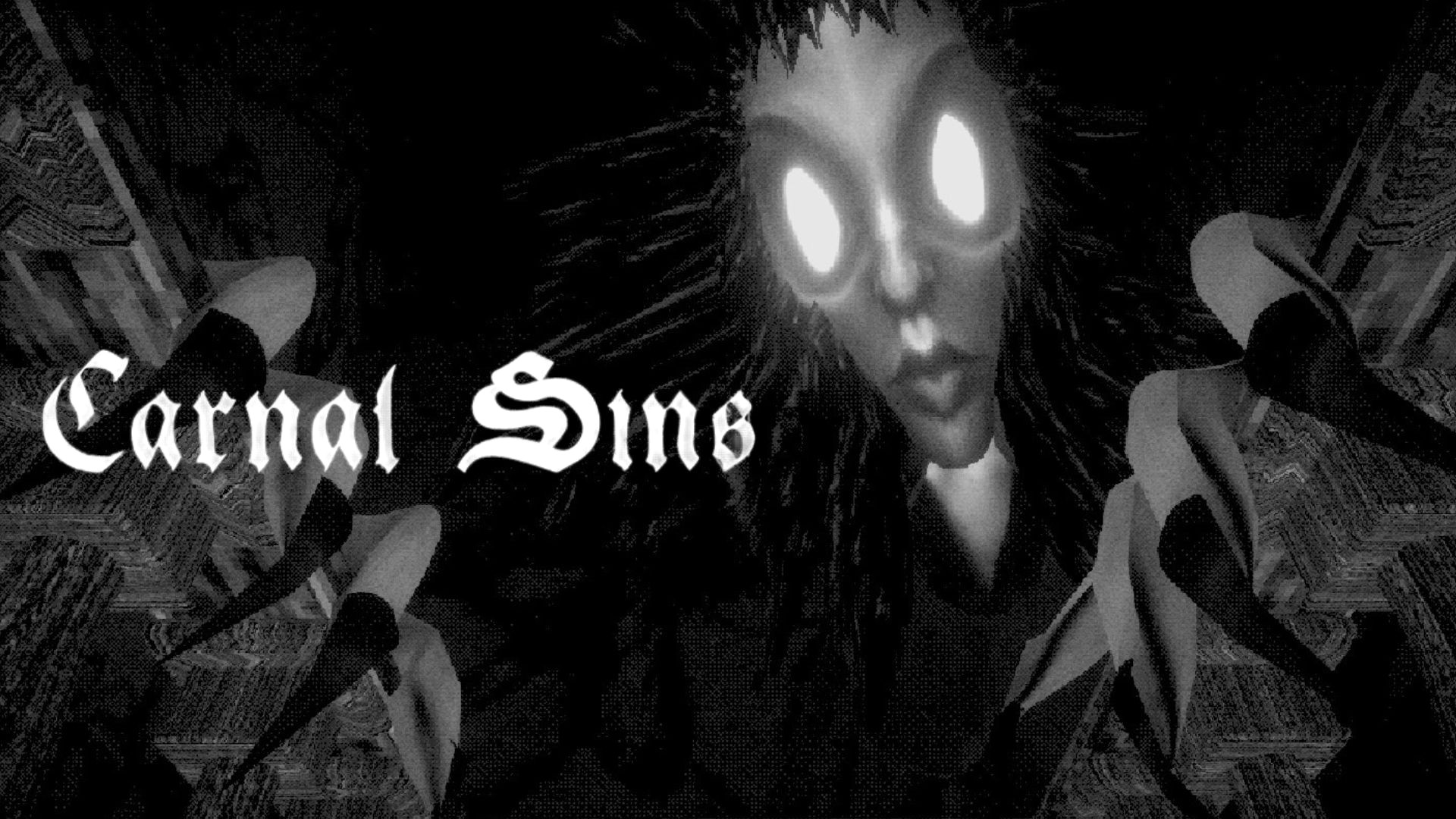
The psychological thriller genre has long been a staple in the horror gaming space, but none lately seem quite so competent and determined to push the envelope to achieve a truly chilling and unique experience as indie devs. Featuring nostalgic retro game aesthetics, introspective hallucinatory horror, and deeply unsettling themes, Out of the Ordinary World‘s new stylized and daunting double feature Carnal Sins: Malum Incarnatum + Carne Vescens delivers a brief but powerful examination of love, mental decline, and self-sacrifice in an especially grim context.
Malum Incarnatum and Carne Vescens are psychologically stimulating titles that dissect the often-destructive elements of love through emotionally charged narratives that expertly intertwine the consequence of religious connotations that weigh heavily on the hearts and minds of the protagonists of each twisted tale.

Through the use of relatively shocking and somewhat jarring imagery, the meaning of life, the cycle of existence, and the individual drive for achieving and maintaining love are highlighted in a manner driven by moral/mental corruption and instability; broken minds trying to heal when it’s already far too late. These games follow separate characters’ stories but manage to come together as a cohesive journey of emotional enlightenment, analyses of human suffering, and a quasi-exposé on the lengths to which some people will go for love.

Malum Incarnatum explores the more romantic aspects of love, where longing is presented as a corrosive and toxic force, leading to a steadily progressive descent into spiritual ruin within a Hellish inner landscape of tragedy and turmoil. Presented as a journey of desperation and hopelessness through memories of the protagonist, or at least his fragmented version of it, the gameplay weaves a great deal of emotion into the experience but leaves a lot to the imagination. Biblical allusions and metaphysical suffering seem to inform the framework for the protagonist’s mental collapse, as the love he’s lost has become a gateway for sinful behavior. Evil enters where love no longer resides.

Carne Vescens, on the other hand, presents a very different type of love, and the consequences of putting others far too highly above oneself. Motherhood is presented as both a sacred and grotesque pursuit, as a new mother feeds her insatiable infant her own flesh to provide it sustenance. Piece by piece she gives herself to the child, and day by day the world around her becomes warped and infected with near-Lovecraftian decay. The Latin title means “fleshy meat,” which really underscores the themes of bodily sacrifice and maternal horror that accompany the gruesome plot, blurring the lines between devotion and total self-annihilation.

Both games shared a minimalist style of gameplay that focused more on narrative presentation through exploration and consistently evolving revelations that presented equally dark insights into the lives of these poor unfortunate souls. With that said, Malum Incarnatum focuses far more on introspective surrealism, allowing for multiple endings gained from deeper exploration of the protagonist’s fractured psyche, while Carne Vescens continuously builds upon a looming dread that consistently grows more oppressive and overwhelming through the cyclical repetition, turning the mundanity of caregiving and childrearing into a crippling ritual of escalating horror.

Both the scattered FMV sequences and the PSX inspired graphics lend themselves to a touch of ’90s nostalgia but lean far more into the point of creating a heightened sense of uncertainty and uncanny unease. This proved to be incredibly effective… I was uncomfortable, but… in a good way. The emotional impact of these devastating journeys, though brief as they were, really evoked a felt sense of grief and self-loathing in a way that many experience during their lowest points in life.

I know that might not sound fun, but much like with any other horror experience, in a controlled environment and in the proper context, it just works! Regardless of both titles featuring multiple endings, the illusion of any real choice was both deliberate and diabolical. The existential dread I faced when coming to terms with each of the characters’ lack of catharsis or closure was unsettling to say the least and demanded that I confront my own interpretations of sin and loss after the credits had rolled.

To say these games were a ripping good time would be disingenuous, but I certainly don’t believe they were meant to be high-octane feel-good fun. These were self-contained narratives that told a story better than most books ever could, in a way that felt both deliberate and interpretive… vulnerable and hopeful. The collection was an odd experience to say the least, but one that I returned to immediately upon completion to see the other endings.

With its striking old-school audiovisual design, the gripping complementary narratives, and the boldness to tackle these taboo topics, for fans of psychological horror, dark themes, spiritual enlightenment, and emotional intrigue, Carnal Sins is definitely worth checking out! 7.5/10