

Back Into the Unknown
I absolutely loved Call of the Sea, so going into Call of the Elder Gods I was honestly a bit nervous.
Sequels to smaller narrative puzzle games can go one of two ways, they either lose what made the original special chasing scale, or they play things so safe they feel pointless. Somehow, this lands somewhere right in the middle… and mostly in a good way.
Played on Xbox Series X, this immediately feels bigger, stranger, and more ambitious. Less isolated island mystery, more globe-trotting cosmic adventure. At times it almost feels like Indiana Jones stumbling headfirst into Lovecraftian madness.
And honestly? I was hooked.

Dual Protagonists That Actually Work
One thing I wasn’t sure about early on was the switch to dual protagonists.
You play as Evangeline Drayton, daughter of one of the original expedition members, alongside returning character Professor Harry Everhart. Usually when games bounce perspectives around, one side ends up feeling weaker.
Not here.
Both characters get strong emotional moments and enough breathing room to feel important. Yuri Lowenthal does fantastic work as Harry, while Mara Junot absolutely sells Evangeline’s mix of curiosity and vulnerability. Then hearing Cissy Jones return as Norah narrating parts of the story hit me harder than expected.
There’s a genuine emotional core running through all the weird cosmic stuff.

Atmosphere & World Design: Cosmic Mystery Over Cheap Horror
This game understands Lovecraft better than a lot of horror games do.
It’s not trying to constantly jumpscare you. Instead, it leans into mystery, isolation, and that creeping feeling that humanity is tiny compared to whatever ancient force is lurking behind reality.
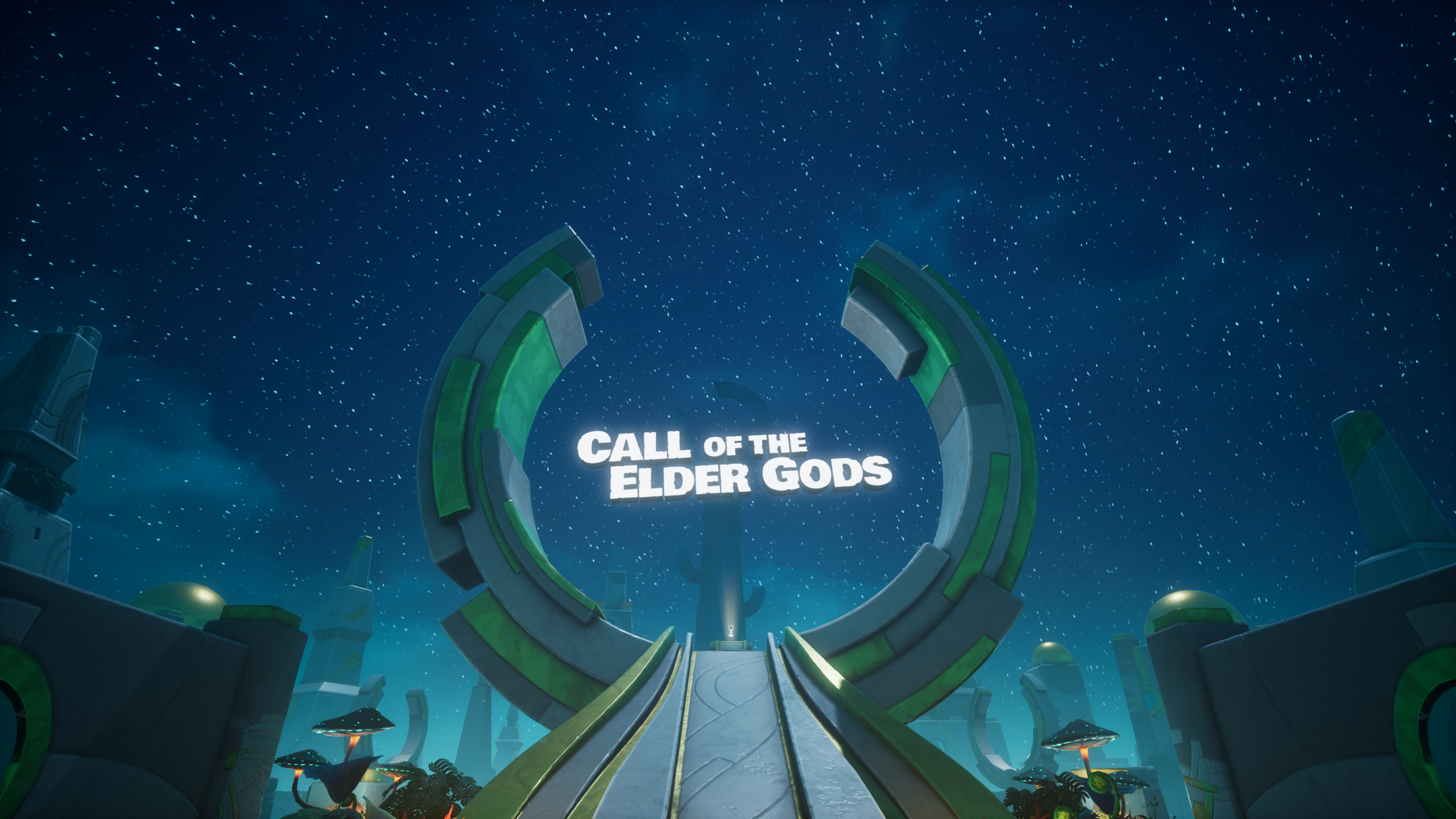
The locations are fantastic too. One minute you’re exploring caves in Virginia, the next you’re wandering through deserts, abandoned compounds, or these bizarre ancient spaces that genuinely made me stop and stare for a second.
There’s a scene involving statues during a storm that I genuinely loved. The atmosphere there was unreal.

The Puzzles: Smart, Rewarding, Occasionally Maddening
If you’re coming here for puzzles, you’re eating well.
This is very much in that Myst and Riven school of design where observation matters more than brute force. You’re constantly checking journals, reading environmental clues, piecing together symbols, and trying to understand how this strange world functions.
When the game clicks, it’s brilliant.
There’s also some clever dual-character puzzle solving where swapping perspectives changes how you approach problems. It keeps things fresh throughout the roughly five-hour runtime.
That said… some puzzles absolutely smacked me in the face difficulty-wise.
A few of the machine, heavy sequences dump a lot of information on you at once, and I definitely had moments of wandering around muttering “what the hell am I missing here?” to myself. Thankfully the hint system is genuinely useful without outright ruining solutions.
Where It Loses Some Magic
As much as I enjoyed it, I do think the original game had a stronger sense of cohesion.
Because Call of the Elder Gods moves around so much, some locations don’t get enough time to fully sink in before you’re whisked away somewhere else. The pacing can feel oddly brisk for a game built around atmosphere and discovery.
A couple of the animated cutscenes also looked a little stiff compared to the gorgeous environments.
And then there’s the ending.
Without spoiling anything… it just didn’t land for me the way I hoped it would. There’s mystery, and then there’s feeling unfinished. This leans slightly too far toward the latter.
Final Thoughts
Even with those issues, Call of the Elder Gods is still a fantastic follow-up.
It expands the world in meaningful ways, tells an emotional story, and delivers some genuinely memorable puzzle sequences wrapped inside a beautifully eerie Lovecraftian adventure.
I don’t think it quite captures the magic of Call of the Sea completely… but man, it gets close.
And honestly? That’s still a huge achievement.