
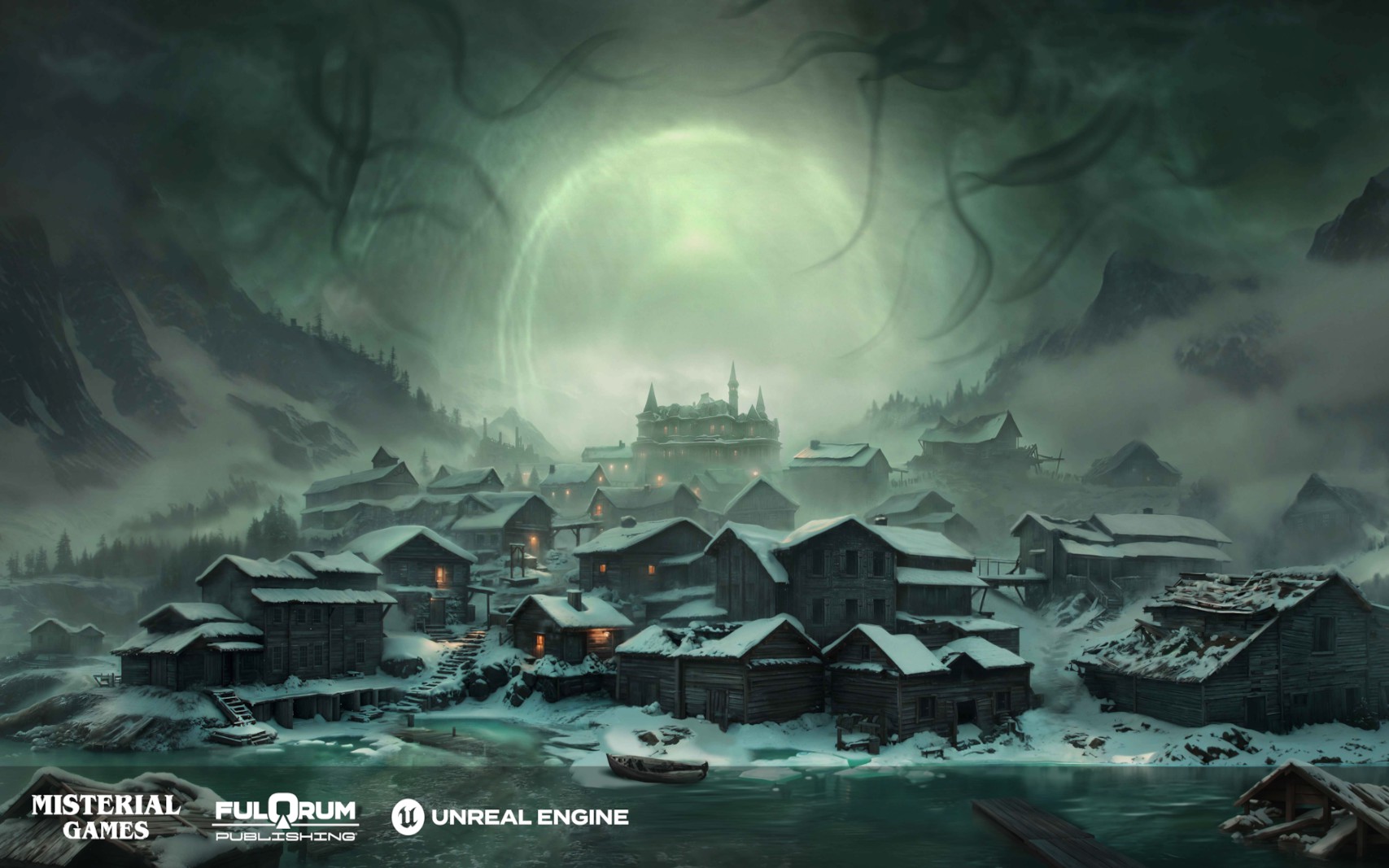

Misterial Games’ Stygian: Outer Gods, a prequel to Stygian: Reign of the Old Ones, delivers a chilling survival horror experience steeped in the cosmic dread of H.P. Lovecraft’s mythos. Set in the fog-drenched, forsaken settlement of Kingsport, this first-person survival horror RPG combines breathtaking visuals, engaging combat, and deep role-playing elements to craft an atmosphere so thick with unease it’s practically palpable. With recent updates enhancing its already compelling framework, Stygian: Outer Gods feels like a modern heir to the eerie, narrative-driven intensity of BioShock, while carving its own path through a world where dread and eldritch horrors lurk around every corner. Though just out of Early Access, this title is shaping up to be a standout for fans of Lovecraftian terror and survival horror alike.
From the moment you step into Kingsport after a harrowing shipwreck, the game’s visuals grip you like a cold, clammy hand. The graphics are nothing short of stunning, painting a world that’s both beautiful and oppressive. Sea eroded houses sag under the weight of decay, their moss-covered beams and mildew-stained walls evoking a New England fishing village abandoned to time and madness. The color vista is deliberately sickly, muted greens, grays, and blues that seem to leach the warmth from your screen, while dense fog and shadowy corners create a claustrophobic sense of being watched. The attention to detail is remarkable: old ropes dangle like nooses in forgotten alleys, and the eerie glow of a distant lighthouse shines creepily through the mist, beckoning you toward secrets best left alone. This haunting aesthetic, reminiscent of BioShock’s Rapture with its art deco decay, immerses you in a world that feels alive yet on the brink of collapse and insanity.

The atmosphere is amplified by the game’s sound design (using my steel series to full effect), which is as much a character as Kingsport itself. Distant whispers, creaking timbers, and the guttural screams of unseen creatures keep you on edge, while the sparse, haunting score underscores the creeping dread. The lack of voice acting for minor characters, like the spectral dead you can commune with via certain perks, is a slight miss, but the ambient audio more than compensates, wrapping you in a sonic cocoon of unease that perfectly complements the visuals.
Combat in Stygian: Outer Gods is a methodical, tension-filled affair that rewards strategy over brute force. Unlike the fast-paced gunplay of modern shooters, this game forces you to think carefully about every swing and shot. Melee weapons like knives, sickles, and heavy hammers feel weighty, but their use is governed by a stamina system that limits you to a few well-timed strikes before you’re left vulnerable. Firearms, a revolver, shotgun, and rifle, are available, but ammo is so scarce that every bullet feels like a precious commodity. This scarcity, coupled with enemies that hit hard and fast, makes combat a high-stakes puzzle. You’ll often find yourself weighing whether to engage or sneak past grotesque foes, a choice that echoes BioShock’s blend of resource management and tactical decision-making. While some have noted the melee system’s clunkiness in Early Access, recent updates have smoothed out performance issues and introduced new weapons and enemies, like Feral Witches and Feral Dogs, adding variety to encounters. The combat isn’t perfect, but it’s undeniably fun, keeping you on your toes as you navigate Kingsport’s dangers.

The RPG elements are where Stygian: Outer Gods truly shines, offering a depth that elevates it beyond a standard survival horror experience. You play as Jack, a battle-scarred mercenary whose character progression is shaped by a system of Sinner’s and Seer’s skill cards. These cards, ranging from occult knowledge to lockpicking or even the ability to speak with the dead, allow for meaningful customization. Your choices shape not only your playstyle but also how the world reacts to you. A high madness level might unlock unique dialogue options or alter NPC interactions, reflecting the game’s Lovecraftian theme of sanity as a fragile resource. Scrying, a supernatural ability that reveals hidden paths or items at the cost of sanity, adds a thrilling risk-reward dynamic. This system feels like a nod to BioShock’s plasmids, where power comes with a cost, and it encourages multiple playthroughs to experiment with different builds. The crafting system, though limited in Early Access, lets you create bandages, lockpicks, and ammo, further tying your survival to careful resource management.
The enemy design is where Stygian: Outer Gods leans hardest into its Lovecraftian roots, delivering creatures that are as unsettling as they are deadly. Feral Witches chant deranged hymns, their twisted forms scuttling through the fog, while other eldritch abominations—grotesque, otherworldly, and dripping with malice, lurk in Kingsport’s shadows. These enemies aren’t just obstacles; they’re manifestations of the island’s descent into madness, each encounter reinforcing the sense that reality itself is unraveling. The sanity mechanic, while not as extreme as some Lovecraftian predecessors, adds a layer of psychological horror: witnessing too many horrors distorts your vision and fills your ears with whispers, pushing you closer to a breaking point. This constant dread, paired with the game’s non-linear exploration, makes every step feel like a gamble against an encroaching void.

Recent updates further adding to Stygian: Outer Gods’ already strong foundation. The latest content update introduced new locations like the House on the Misty Hill and Blood Forest, alongside new quests, NPCs, and artifacts. These additions expand the game’s roughly 8-hour Early Access content, with a full release promising 8-10 hours of story-driven gameplay. Performance patches have addressed some optimization issues, though high-end systems may still need tweaking for a smooth experience. I myself had to tweak the settings initially. The developers’ roadmap suggests more languages and refined mechanics are on the way, showing a commitment to polishing this gem.
If Stygian: Outer Gods reminds me of BioShock, it’s in its ability to blend a richly atmospheric world with meaningful player choice and tense, resource-driven gameplay. The island of Kingsport, like Rapture, is a character in its own right, a place where beauty and horror coexist, and every decision feels like a step toward salvation or damnation. While the game’s combat could use a touch more polish. These are minor quibbles in an otherwise gripping experience. For fans of Lovecraftian horror, survival games, or RPGs with a dark twist, Stygian: Outer Gods is a must-play. It’s a descent into madness that’s as captivating as it is unsettling, and I’m eager to see where Misterial Games takes it next. I would like to add that the game is extremely well priced for what you are getting at $25.99 CAD & $19.99 USD.
8.5/10