
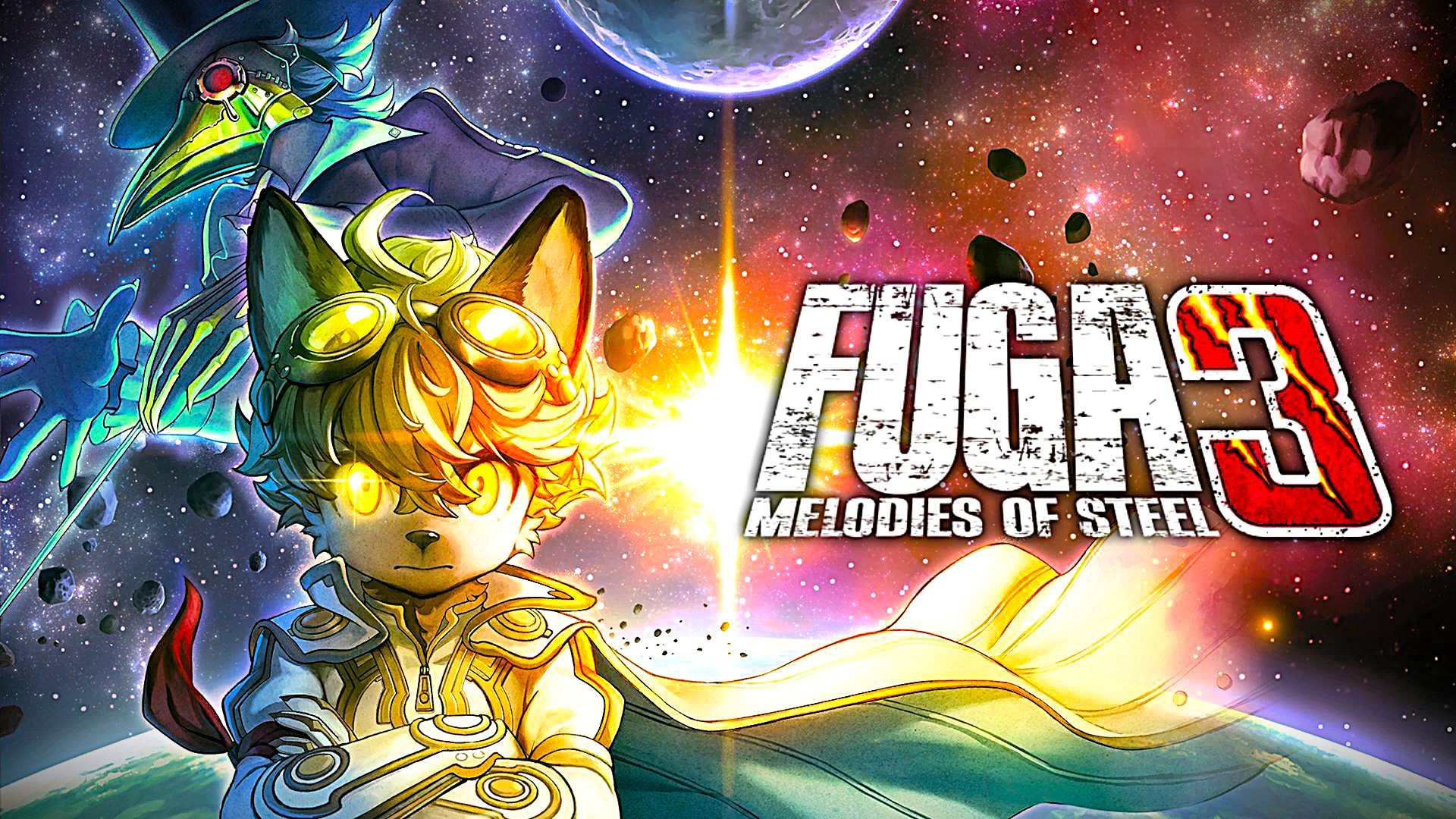
The first game in the now popular anthropomorphic animal focused action-adventure RPG trilogy Fuga: Melodies of Steel released a little less than four years ago to a relatively quiet launch when considering that it was developed by some longtime industry veterans at CyberConnect2, the developers of just about every great anime video game tie-in, like most of the Naruto, Demon Slayer, and JoJo’s Bizarre Adventure games, as well as one of my favorite PlayStation classics, Silent Bomber, which was published by Bandai all the way back in 1999.
The game technically marked the fourth entry in the long-running Little Tail Bronx series but served as a prequel to 1998’s Tail Concerto and 2010’s Solatorobo: Red the Hunter, and due to its fresh and fascinating gameplay coupled with the depth of character development and narrative direction it possessed, it quickly picked up steam.
It wasn’t long before players became aware of its unique blend of tactical combat scenarios with dramatic world building, intriguing lore, emotionally charged character interactions, and an assortment of varied gameplay styles throughout its poignant and compelling story that consistently kept the experience engaging.
Thanks to the rapid growth in the game’s popularity, two more sequels have since released to even greater critical and commercial success, with the most recent entry, Fuga: Melodies of Steel 3, having only released just last month to a tremendous start. Both sequels offer relatively in-depth story and character recaps, complete with a wealth of encyclopedic knowledge that can be viewed at any time to learn more about the people, places, and events encountered in the past and present titles in the series, so no worries if you haven’t played the other games.

The game is set in a war-torn country with a tragic, emotional roller coaster of a narrative, filled with gripping life and death situations, meaningful decisions, often beautifully uplifting moments shared between bonding allies, multiple branching story arcs, shocking surprises at every turn, and enough mystery to keep the player engaged and eager to uncover the truth and reveal the full picture. The group of kids featured as the game’s eclectic, ragtag, tank operating, justice seeking protagonists, are as varied as they are interesting.
You’re welcome to start with the third and, more than likely, final game in this particular trilogy prequel arc for the series, though it’s worth starting from the beginning to really develop a deeper sense of connection to the thematic tone of the world and the potential allies that inhabit it.
The game retains much of the grim yet hopeful visual tone of its predecessors through its use of often subdued watercolors in its artstyle and animation, much as it was in the previous two games in the trilogy. With relatively uninteresting backgrounds during combat encounters and a somewhat drab color palette, there were brief moments where it felt as though very little had been improved visually.
This time however, the game’s artists paid a great deal of attention to detail when presenting the characters’ and world’s evolutionary growth through physically observable changes that seemed to better elucidate the reality of the situation the player finds themselves in, than any words could describe.

Much of the game’s individuality and unique beauty come from this rarely used artistic direction in the gaming medium, and I found it refreshing and near-consistently stirring as the cutscenes and creatively constructed mechs, enemies, weapons, and character designs really seemed to steal the show in regard to the optical treats on offer.
With that said, Fuga: Melodies of Steel 3 picks up where one of the five possible endings from the previous game left off, with series’ protagonist Malt Marzipan being lured into a cave where Crimson Knights are lying in wait to ambush and capture him. The third game begins with Malt’s remaining child companions aboard the mega tank “The Taranis” setting out on a harrowing mission to rescue their friend by any means necessary, including taking the fight directly to the hostile Berman Empire and their deadly allies. This is where the fighting begins… again.
Though the combat encounters in the series have always featured exhilarating, strategy focused gameplay mechanics, the improvements found in the third entry change a number of important aspects that not only affect quality of life features, but also directly influence the way in which the player is able to interact with the attacking enemy forces.
With the removal and replacement of certain weapon systems, a more unpredictable function for the unbelievably destructive Soul Cannon that gives the player the ability to sacrifice one of the children from their crew to achieve victory when overwhelmed (which is equal parts deeply disturbing and incredibly imaginative), and a notable increase in companion link attacks that are automatically performed once the appropriate power meter is filled, the game just flat out plays better.

On top of all that, there are a fair number of leadership skills that can be developed and utilized in key moments of tense battle, including active abilities and passive buffs that can be attained and improved through the further development of deeper bonds with the children in the crew. The classics are all here, offering benefits such as increased attack speed, damage increases, extra turns, SP boosts to provide the opportunity to use skills more frequently, and so many more useful traits that can be discovered and deployed on the battlefield.
If the improvements to previous game mechanics weren’t enough to entice you, then put on your battle helmet and strap in. There’s now an assist meter that allows recruitable NPCs to unleash devastating attacks to turn the tide of battle on the player’s behalf, as well as the addition of stackable combos that deal up to triple damage from specific targeted attacks. As far as the assistant NPCs are concerned, they can be gained through building up the protagonists’ Tactics and Bravery traits as the player is given optional dialogue and action-oriented decisions to make throughout the narrative that impact certain key moments during the story.
Apart from those few key inclusions, the majority of the tank combat encounters are relatively formulaic for the turn-based action RPG genre. Each battle allows for the player to assign the best crew member for the job depending on the type of enemy they are facing, with the most suitable method of dispatching said enemy being mostly dependent on each of the children’s unique tactical advantages, special abilities, and overall combat prowess.

Three children must be assigned positions within each available crew slot to satisfy both combat and support roles. Whether manning grenade launchers for balanced engagement, operating precision machine guns to better acquire aerial targets on the move or specializing in cannon volleys for massive damage to ground enemies, these kids will grow their stats and improve their various skills and abilities over the course of twelve evolving chapters of heartwarming relationships, heartbreaking loss, and general heartlessness in its purist form.
With a hefty measure of import placed on a concise strategic approach, thoughtful bond improvements, and the clever application of beneficial allies, upgrades, and attack adaptations, the combat can lead to a fair deal of variation featuring true synergy, strategy, and flat-out survival!
Though the tank combat in the Taranis is certainly enjoyable and varied, it isn’t quite the best part of the game in my opinion. The most intriguing and immersive moments during my time with the game were found as I freely switched between characters aboard the Taranis, building lasting friendships, completing valuable tasks like cooking and farming, commissioning weapon and armor upgrades, attaining resources through fishing and trade, and even embarking on third-person action exploration expeditions to search for hidden treasures and battle fearsome foes, all the while solving a few clever puzzles with the use of my trusty toy guns, bombs, and various other resources.

As the player makes progress throughout the game and its many branching paths, they will be treated to a number of decisions that will not only gain them new allies as previously touched on but also be provided many opportunities to explore the world, interact with merchants, and acquire the resources necessary for upgrading and expanding the facilities on the Taranis.
These upgrades and expansions are accompanied by the ability to cultivate new and beneficial ingredients used to unlock recipes allowing for unique temporary buffs, harvest valuable components through farming and fishing to allow for upgrades to the tank itself, rest and do chores to improve experience and relationships between crew members, and many more tasks of a similar nature around the Taranis that provide a more insightful depth into the lives, personalities, and motivations of the characters central to the plot.

The writers really seemed to put a tremendous effort into showcasing how each individual is reacting and adapting to the ongoing travesties of the war in which they were thrust into. With misery on their minds and hopelessness in their hearts, this crew of desperate underdogs are forced to face off against consistently overwhelming odds in the form of some of the most sinister and stylish supernatural enemies in the genre, as well as their legions of accompanying mechanical comrades and high-tech super weapons.
Through the power of friendship, determination to achieve a common goal, and a blood-thirsty desire for vengeance and recompense that must be quenched, with proper management from the player, these kids will surely become the heroes they were always destined to be… but if improperly managed… I guess we’ll have to wait and see how things shake out.

Though I have briefly detailed the well-crafted turn-based tactical combat scenarios, the expertly implemented on-foot exploration featuring real-time combat and puzzles, the deeply involved narrative featuring carefully crafted lore and unique personal character interactions and relationship building, an engaging and immersive time management system akin to something out of the Persona series that allows for the attainment of resources, experience, and increased combat effectiveness through deepened bonds, plus a handful of active and passive mercantile and team organization elements to round out the experience, there is one major aspect of the game that I haven’t yet explained; Fast Mode.
Fast Mode is a wildly divisive and relatively game-breaking feature that allows the player to tailor their gameplay experience into a more narrative focused journey. With Fast Mode enabled, the Taranis and its crew become nearly indestructible killing machines of unmatched enemy extermination! For people who are mostly just interested in playing for the story and non-combat elements, Fast Mode makes nearly every attack a one-shot kill, all the while providing multiple turbo settings to allow for faster vehicle movement.
This accessibility feature is useful for a myriad of reasons, namely the added simplicity found when a player may decide to attempt multiple replays of the game to witness the various different narrative shifts and ending outcomes. Apart from that, the mode can also be utilized by players who are perhaps not adept at turn-based roleplaying games, aren’t interested in a challenge, or simply want a more relaxed and smoothly flowing narrative driven experience, without the potential roadblocks that enemies and boss encounters might impose.

Overall, I enjoyed my time spent with Fuga: Melodies of Steel 3, though I would have preferred the option for English dialogue audio, less time spent engaging in tank combat and more time spent exploring on foot, as well as a more compelling gameplay loop as it did become slightly repetitive at times.
With that said, it was a relatively immersive experience that provided me with many hours of fun, heartfelt engagement, and whole lot of good old-fashioned blowing stuff up! If you’re a fan of turn-based RPGs, side scrolling combat, anthropomorphic animals, wartime dramas, and/or heavily developed narrative and story driven games, then I think it’s safe to say that this one will be worth your time.
Final score 7.5/10