
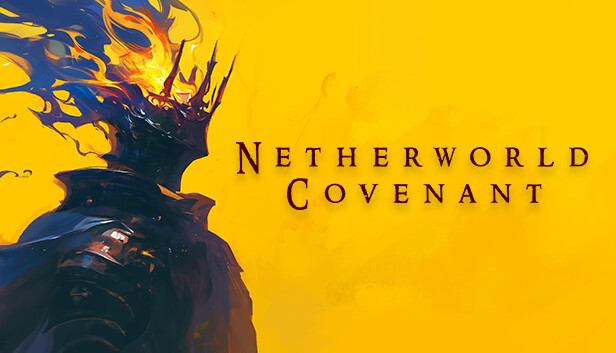
Netherworld Covenant is a newly released roguelike action-adventure title developed by a two-person team at MadGoat Game Studio and published by Infini Fun. It seemed pretty clear from the start that the devs looked closely at some heavy hitters from the roguelike and soulslike genres and created their own creative combination of inspired action. First off, I got a strong sense of Dark Souls inspiration as I played a knight who was on a path of vengeance for his fallen comrades. Throughout the experience I felt that the armor, weapons, and dark/gothic medieval vibe felt almost like an homage to the Dark Souls series. Something else that was readily apparent is that Netherworld Covenant gives Hades its flowers by presenting the game with a very similar style of combat and camera angle, which to me isn’t such a bad thing as Hades’ combat is pretty damned fun and solidly crafted.
To kick things off I played this game on my Steam Deck, and though there were a few hiccups that I may have not encountered on a gaming PC, what I experienced was a pretty enjoyable time with all things considered. With fluid controls and well crafted gameplay mechanics, the combat and movement felt responsive and intuitive when playing with my Steam Deck in hand. The only gripe I have, and yes this could be a mostly handheld problem rather than a desktop issue, but I found the menu navigation when in the journal or really any menu for that matter seemed to cause lag and feedback delays. This caused me a bit of frustration when all I wanted to do was seamlessly scroll the in-game menus for aid, upgrades and everything in-between.

Moving away from the lack of direct Steam Deck optimization, for a roguelike the story was actually pretty damned intriguing in terms of how it gripped me by the chest-plate and said “wake up, time to kick some ass”. When a Black Knight approached on horseback and told my character that he needed to accept the calling of “the lantern’ to avenge his fallen friends, I was initially confused yet interested in his proclamation. Soon thereafter I realized that accepting the lantern would grant me powerful abilities that gave me the strength to charge towards my foes, so call me Florence Nightingale because the lantern dost call!

The gameplay for sure has that hack and slash and roll-out-of-the-way kind of vibe, which for me is the heart and soul of any good roguelike and soulslike game. As I learned enemy patterns and figured out which weapons and abilities were best suited to my playstyle, I quickly figured out that I could mostly wail on the majority of my foes with reckless abandon whilst maintaining strategies of artful dodging to avoid devastating incoming attacks. Becoming proficient in offensive strategic combat was especially important during the delightfully hellish boss encounters that were akin to those you might see in games like Dante’s Inferno, with one of the bosses even being a soulless demonic resurrection of a fallen comrade. On the subject of boss battles, some of these struggles for survival were unforgiving and would absolutely turn me into a tin can when given the chance.

Once again, I feel it necessary to briefly shift the topic back to optimization. If you are an on-the-go gamer and choose to play Netherworld Covenant on the Steam Deck like myself, I think you’ll find that the game runs exceptionally well at 40fps and above. However, the quality of the game’s graphical capabilities comes with a hefty battery burn. I ran the game at 40fps and the battery life on a full charge gave me around two and a half hours of playtime. This fact is especially notable when comparing this relatively small indie roguelike to major open-world triple A titles that somehow run optimally with a much lower battery drain-rate. I think this comes from its clear PC focused launch, and I believe these issues could greatly improve with full Steam Deck optimization. I imagine this title would have no problem performing with ease on a mid-to-high level gaming PC setup.
Though the game takes some obvious inspiration from better known roguelike and soul-like titles, it does have three difficulty modes to make the gameplay more accessible to a broader audience of gamers. These difficulties are cleverly titled; Sturdy Helmet (easy), Skull Crown (medium), and upon completion of Skull Crown the player unlocks the more punishing Iron Crown (Hard). These options give players a stronger sense of agency as the developers have allowed for a more tailored experience while still offering the challenges that come with a pure roguelike game. After trying both Sturdy Helmet and Skull Crown, I recognized a noticeable difference in difficulty and even though I have yet to complete the game in full, I can see Iron Crown being an absolute demon to conquer! After only just barely slaying the first boss on Skull Crown difficulty and being left with a bead or two of sweat on my brow, I know now that Iron Crown will not be for the faint of heart and will perhaps offer the more hardcore roguelike veterans the challenge they seek.

Netherworld Covenant really shines the more that it leans into its roguelike features. After completing tense battle sequences I was treated with a growing selection of upgrades that allowed for further tailoring of the experience into what I found to be most fitting for each run, but with enough randomization that it kept the journey fresh and exciting. Beyond these choices were many on-the-spot decisions that would lead to varying outcomes of success and fortune. Which path should I take and what lies ahead? Do I go for gold to fill my coffers or should I opt for the XP to improve my build? The answers to these questions were not always clear and truly come down to what the player wants from their specific playthrough. I often found myself returning for more punishment on far more than one occasion with multiple enemies giving me a good shield bashing as I tried to gain more resources.
However much I may be singing Netherworld‘s praises, I did encounter some bugs which halted my progress and hindered some of my enjoyment of the game. I encountered a pretty harsh bug where after defeating all of the enemies on a stage, the battle music still rang out as though I had more enemies en route to meet their end on the point of my blade. As I eagerly awaited their arrival, time kept ticking away and still no enemies emerged. I ran around for at least five minutes, the music persisted, the enemies never showed, and the game refused to allow me to progress. This bug led to me having to exit and reload the game, which if you’re familiar with roguelikes you’ll know that this action cost me the run I was on. My frustrations were high as I was particularly invested in that run, having made a fair amount of progress, but this bug was not a consistent issue and I persevered.
As I hit the real knuckle of this review, I must say that I believe Netherworld Covenant is worth a look at. I had a mostly positive experience playing the game on Steam Deck, enjoying the combat, style, tone, and gameplay mechanics. However, in nearly equal part I felt hindered by the bugs I encountered during certain sections of this title. Maybe this is on me for playing on Steam Deck, but with any non-console release, there is no “true device” to test these games. With that noted, I have a feeling that if the game runs mostly well on the Steam Deck, then it will surely run better on a nice gaming PC.
My overall experience with this game was more positive than negative and I sit on my throne with that decision. Netherworld Covenant scores a solid 7/10 for me, due in no-small-part to how it sought to carve out its own path, whilst taking inspiration and paying homage to the giants of the genre. The gameplay is well enough crafted that I had fun and was always eager to start another run as the previous one ended. I found that the numerous choices given to the player, the large selection of intriguing skills and enemy types, and the ever-evolving progression system really kept me engaged in the experience. I feel if the bugs were to be ironed out (which in due-time, I imagine they will be) the title would probably score a little higher with me.